
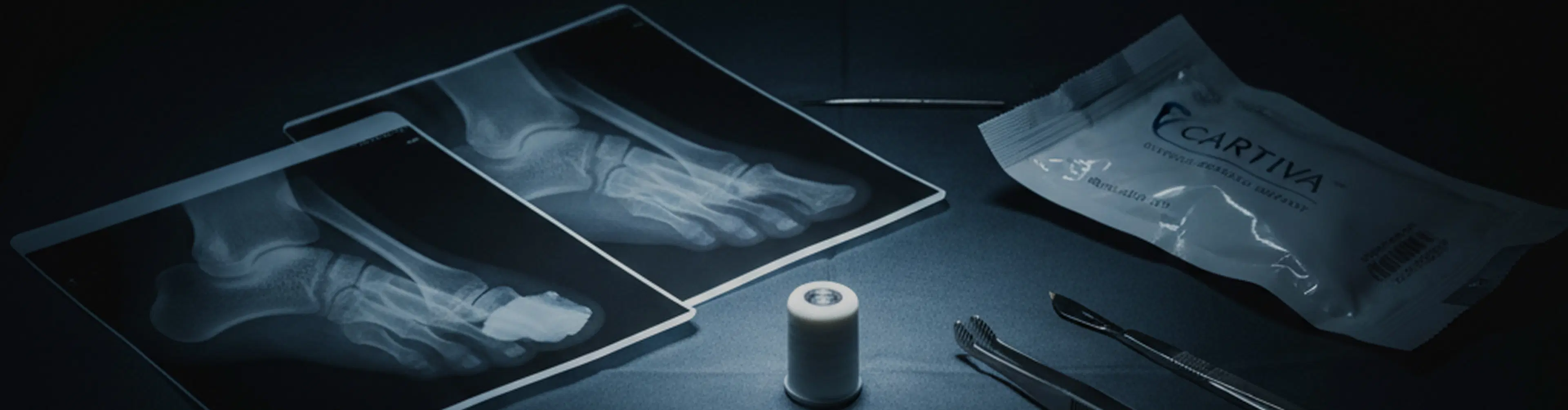
Cartiva Implant Lawsuit
The Cartiva synthetic cartilage implant, used to treat big toe arthritis, is alleged to be linked to premature implant failure, persistent pain, and the need for costly revision surgeries. If you received a Cartiva implant and suffered complications, you may be eligible to file a claim.
Get A Free Case ReviewATTENTION: CARTIVA IMPLANT VICTIMS
If you or a loved one received a Cartiva synthetic cartilage implant and suffered implant failure, persistent pain, or required revision surgery, you may be eligible to file a claim!
Consumers Injury Help offers a completely free case review. Lawsuits allege Wright Medical Technology failed to adequately warn patients about the risks of Cartiva implant failure. Time limits apply — find out if you qualify today.
Find Out if You Qualify
Free, Confidential Case Review
FREE CASE REVIEW
SEE IF YOU MAY QUALIFY

How do we help YOU?
Wright Medical Technology marketed the Cartiva implant as a long-lasting alternative to joint fusion for big toe arthritis, but many patients experienced rapid implant failure, persistent pain, and were forced to undergo costly revision surgeries. Victims deserve justice and full compensation for their suffering.
How does filing a claim work?
- 1. Tell us what happened. Choose the product and answer a few questions.
- 2. Our intake team reviews your answers.
- 3. If it fits, an independent attorney or their team contacts you to explain your options.
- 4. You decide whether to move forward.
- Remember: the case review is free. Attorneys commonly work on contingency, and fee terms are set by the attorney.
Cartiva implant failures caused preventable harm — Wright Medical must be held accountable.
The Cartiva Synthetic Cartilage Implant (SCI) was FDA-cleared in 2016 as a minimally invasive treatment for hallux rigidus (big toe arthritis). However, a significant number of patients experienced early implant failure, severe post-operative pain, and implant subsidence — sinking into the bone — requiring salvage surgery to fuse the joint. Lawsuits allege that Wright Medical failed to adequately disclose the true failure rates to patients and surgeons.
What Is the Cartiva Implant Lawsuit?
The Cartiva implant lawsuit involves legal claims filed by patients who received the Cartiva Synthetic Cartilage Implant (SCI) for hallux rigidus — a form of big toe arthritis — and subsequently experienced premature implant failure, severe pain, bone deterioration, or required revision surgery. The device was marketed by Wright Medical Technology as a joint-preserving alternative to fusion surgery that offered faster recovery and preserved range of motion.
Plaintiffs allege that Wright Medical knew or should have known about the elevated failure rates and failed to adequately warn patients and physicians. Lawsuits seek compensation for medical expenses, revision surgery costs, pain and suffering, lost wages, and diminished quality of life.

Who Can File a Cartiva Implant Lawsuit?
You may be eligible to file a Cartiva lawsuit if you or a loved one received the Cartiva SCI device and subsequently experienced implant failure, persistent or worsening joint pain, implant subsidence (sinking into the bone), or were required to undergo revision surgery including joint fusion.
Did your Cartiva implant fail or cause serious harm?
Get A Free Case ReviewInjuries Alleged to Be Linked to the Cartiva Implant
- Implant failure and collapse — device breaking down far sooner than expected
- Implant subsidence — device sinking into the surrounding bone, causing deformity and pain
- Persistent or worsening joint pain — ongoing discomfort despite the procedure
- Implant migration or displacement — device shifting from its original position
- Bone loss and deterioration — degradation of the metatarsophalangeal joint
- Revision surgery — requiring joint fusion (arthrodesis) to correct the failed implant
- Loss of mobility — reduced range of motion affecting daily activities and quality of life
Cartiva Lawsuit Status & Compensation
Cartiva implant lawsuits are being filed across the United States. Plaintiffs allege product liability, negligence, and failure to warn against Wright Medical Technology and its parent company Stryker Corporation. Cases are in various stages of litigation, and attorneys are actively accepting new clients.
Compensation may include medical expenses related to revision surgery and ongoing care, lost wages during recovery, pain and suffering, permanent disability, and reduced quality of life. There is no upfront cost — attorneys handling these cases work on a contingency fee basis, meaning you only pay if you receive a settlement.
Last reviewed: · Lawsuit descriptions summarize allegations made in court filings, not proven facts.