

Camp Lejeune Lawsuit
Veterans, family members, and civilian workers exposed to toxic water at Camp Lejeune between 1953 and 1987 may be entitled to significant compensation under the Camp Lejeune Justice Act. Get your free case review today.
Get A Free Case ReviewATTENTION: CAMP LEJEUNE VETERANS & FAMILIES
If you lived or worked at Camp Lejeune and developed cancer or another serious illness, you could be entitled to SIGNIFICANT compensation!
Consumers Injury Help offers a completely free case review and manages the entire process. The Camp Lejeune Justice Act allows affected individuals to finally pursue claims that were previously blocked — but time limits apply.
Find Out if You Qualify
SIGNIFICANT Compensation May Be Available
The government knew about the contamination for years — yet did nothing to protect those living and working on base.
Between 1953 and 1987, the drinking water at Camp Lejeune was contaminated with dangerous levels of industrial solvents and chemicals. Residents and workers were exposed to TCE, PCE, benzene, and vinyl chloride — all known carcinogens. The Camp Lejeune Justice Act now gives victims the right to seek compensation they were long denied.
LARGE SETTLEMENT AMOUNT
COULD BE CLAIMED
In 2022, a newly enacted legislation empowers veterans and their families impacted by tainted water at Camp Lejeune to submit claims and seek compensation for illnesses or fatalities suffered as a result.
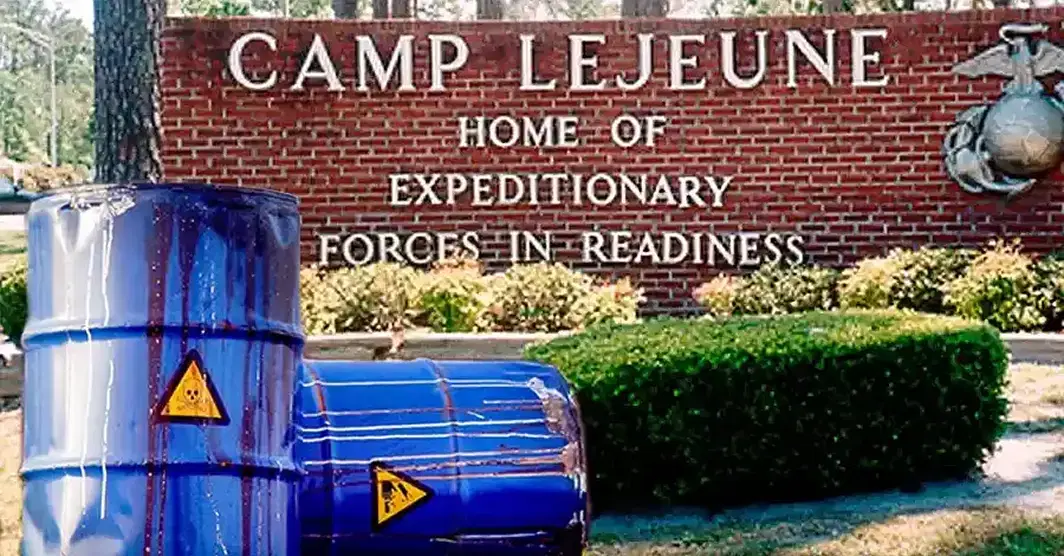
How do we help YOU?
In 2022, a newly enacted legislation empowers veterans and their families impacted by tainted water at Camp Lejeune to submit claims and seek compensation for illnesses or fatalities suffered as a result.
How does filing a claim work?
- Fill out our simple form. Or call to make your claim immediately.
- Get a FREE case review from our expert legal partners.
- We fight on your behalf for the highest compensation possible.
- Claim your settlement!
Remember: you only pay if you get a settlement! Our service to you is totally RISK FREE. You won't pay anything until our experts win your case.
Camp Lejeune Justice Act of 2022
The Camp Lejeune lawsuit involves legal claims filed by veterans, family members, and civilian workers who were exposed to contaminated drinking water at Camp Lejeune, a U.S. Marine Corps base in North Carolina, between August 1953 and December 1987.
The water supply was contaminated with toxic chemicals including trichloroethylene (TCE), perchloroethylene (PCE), benzene, and vinyl chloride — all recognized carcinogens. The Camp Lejeune Justice Act of 2022 allows affected individuals to file federal claims for the first time, overriding prior legal barriers.
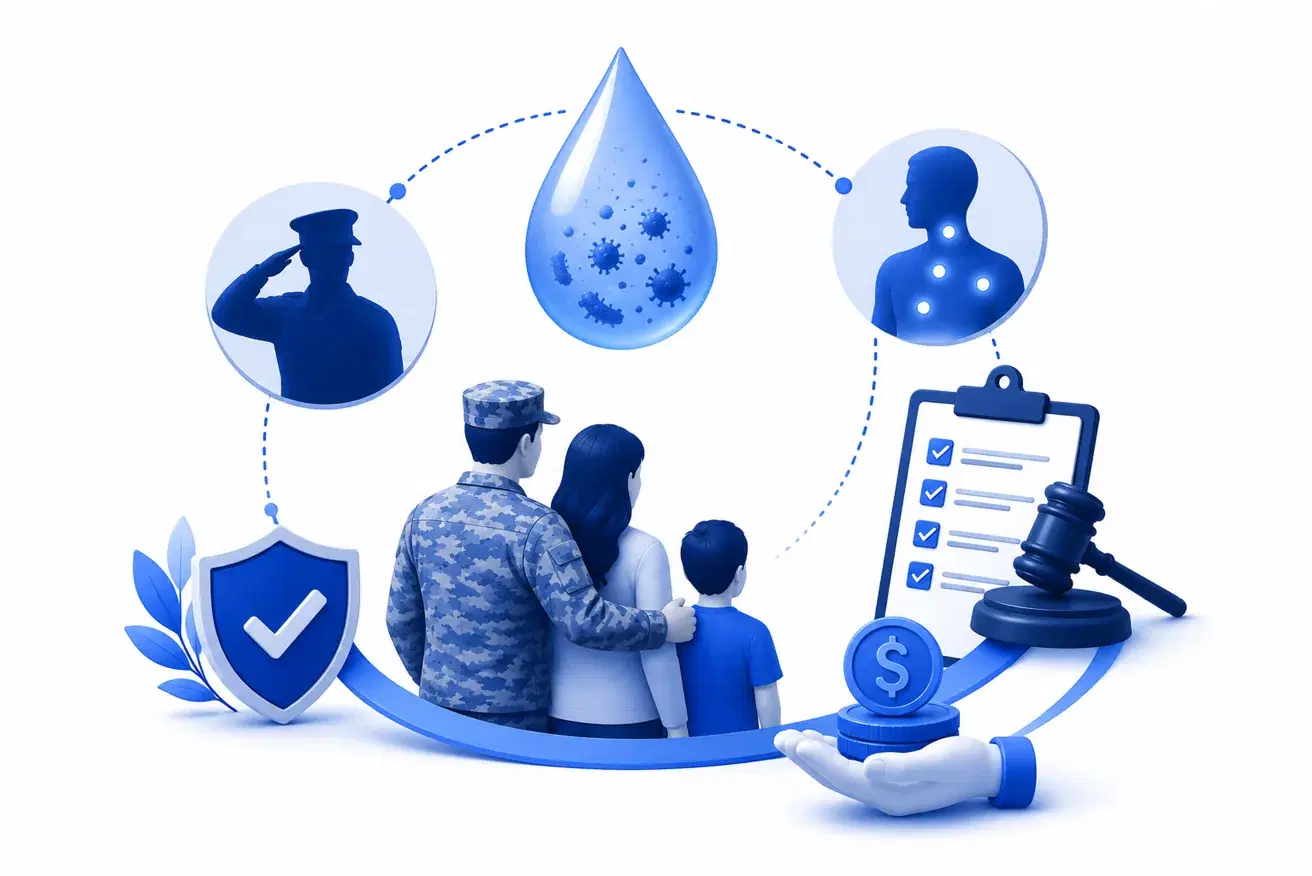
Who qualifies for the Camp Lejeune lawsuit?
The Camp Lejeune lawsuits aim to deliver justice and compensation to those harmed by toxic water exposure. Victims have developed serious health conditions—such as lung cancer, leukemia, and other illnesses—linked to long-term contamination at the base.
Need help filing a Camp Lejeune Claim?
Speak with a Product Liability ExpertHealth Conditions Linked to Camp Lejeune Water
- Leukemia — blood cancer strongly linked to benzene exposure
- Bladder cancer — one of the most commonly reported conditions among claimants
- Kidney cancer — linked to TCE contamination in the water supply
- Liver cancer — associated with long-term chemical exposure
- Non-Hodgkin lymphoma — recognized by the VA as a presumptive condition
- Parkinson's disease — neurological condition linked to TCE exposure
- Birth defects and neural tube defects — affecting children born to mothers exposed during pregnancy
- Neurobehavioral effects — cognitive and developmental issues in children exposed in utero
Chemicals Found in the Camp Lejeune Water Supply
- Trichloroethylene (TCE)— industrial solvent linked to kidney cancer and Parkinson's disease
- Perchloroethylene (PCE) — dry cleaning solvent associated with bladder cancer and leukemia
- Benzene — known carcinogen causing leukemia and blood disorders
- Vinyl chloride — highly toxic industrial chemical linked to liver cancer
How to File a Camp Lejeune Claim
1. Verify Your Eligibility
Confirm that you (or a loved one) lived, worked, or served at Camp Lejeune for at least 30 consecutive days between August 1953 and December 1987, and have a qualifying diagnosis.
2. Gather Documentation
Collect military records, residency documentation, employment records, and medical records that confirm your diagnosis and connect it to your time at the base.
3. Consult a Legal Expert
Consumers Injury Help connects you with experienced Camp Lejeune attorneys at no upfront cost. Our partners handle the entire process on your behalf.
4. File Your Claim
Your attorney will file an administrative claim with the U.S. Navy JAG office and, if needed, pursue litigation in federal court to secure your compensation.
Why Start a Camp Lejeune Lawsuit?
Filing a Camp Lejeune lawsuit is important for:
- Compensation: To recover costs for medical care, treatment, and other illness-related expenses.
- Justice: To hold the government accountable for allowing toxic water exposure at the base.
- Awareness: To highlight the dangers of environmental negligence and push for stronger regulations.
Victims—often veterans and families stationed at Camp Lejeune from the 1950s to 1980s—can file claims through the Eastern District of North Carolina under the Federal Tort Claims Act.
Camp Lejeune Lawsuit Timeline & Settlements
The Camp Lejeune Justice Act was signed into law in August 2022, enabling tens of thousands of affected individuals to file claims. Cases are currently being processed through the U.S. District Court for the Eastern District of North Carolina, with bellwether trials helping establish settlement ranges.
Settlement amounts vary based on the severity of diagnosis, duration of exposure, medical costs, lost income, and pain and suffering. While no guaranteed payout amounts exist, attorneys are actively negotiating on behalf of claimants with serious conditions.